AI Agents
Development of AI agents capable of independent thinking and operation using external tools

What is an AI agent?
An AI agent is an AI-based system that autonomously comprehends situations, formulates plans and selects actions to achieve a given objective. Its defining feature is the ability to proactively carry out tasks based on assigned goals, without requiring human instructions at each step.
Among AI agents, generative AI agents, which are built around large language models (LLMs), have recently been attracting attention.
By leveraging the advanced language understanding and reasoning capabilities of LLMs, a generative AI agent can semi- or fully automatically perform a sequence of processes from understanding intent (interpreting natural language) and planning (breaking down tasks and defining workflow) to execution (integration with external tools, APIs and enterprise systems).
Unlike standalone generative AI that specializes in responding according to input, a generative AI agent can actively operate external tools, enabling it to handle business process automation and execute complex tasks.
The ability to replace or significantly enhance certain tasks that have traditionally been performed by humans represents a major source of value.
Examples of AI Agent Development
-

Conversational Assistant Agent
Retrieve information and generate responses starting from interactions via channels such as Slack, Microsoft Teams or a web interface.
Learn more
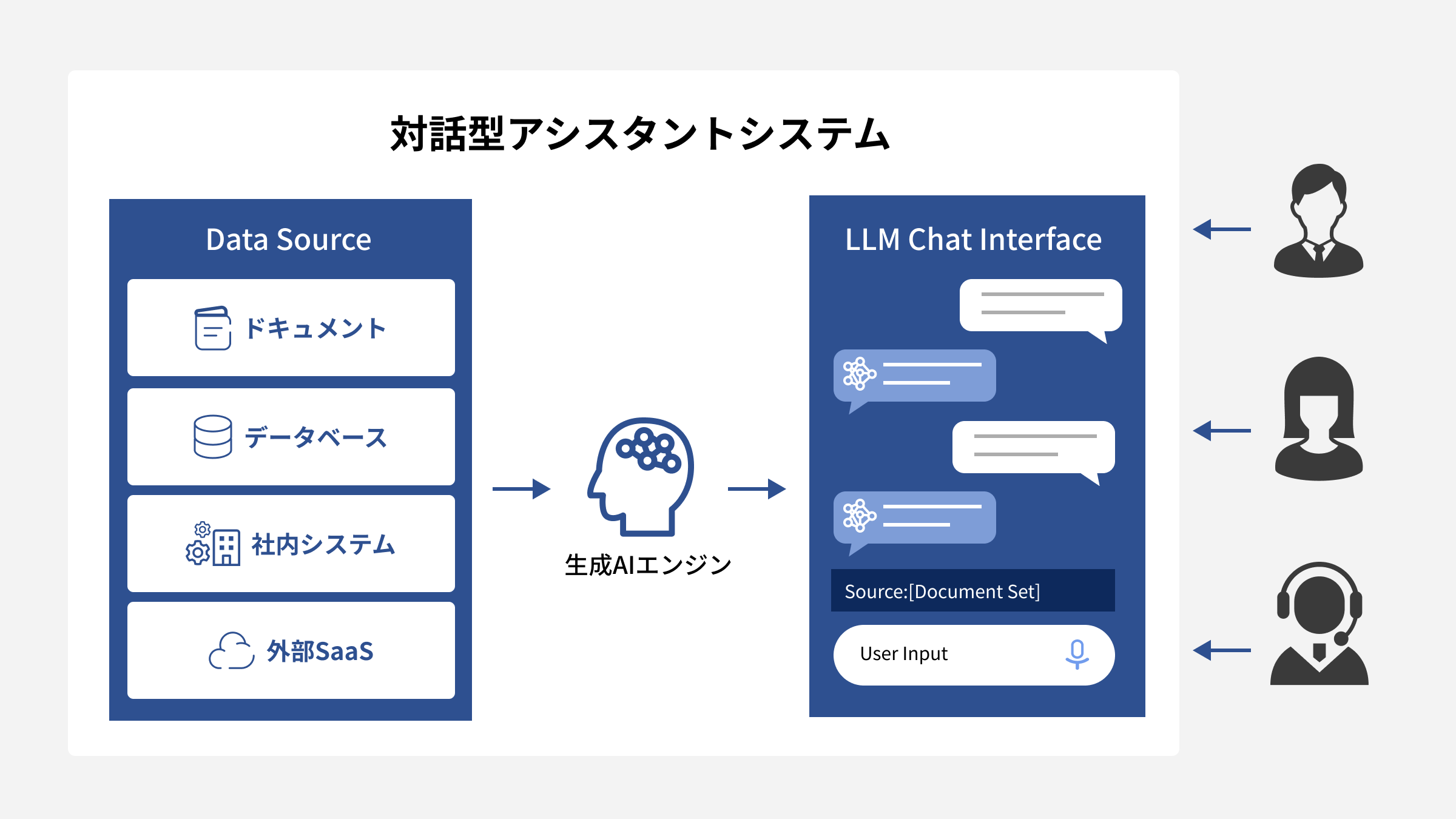
Conversational Assistant Agent
A conversational assistant agent securely and reliably retrieves information and generates responses starting from interactions via channels such as Slack, Microsoft Teams or a web interface.
The generative AI agent independently identifies and evaluates the information it needs and autonomously searches for it across relevant sources to complete tasks provided through conversation. This enables a seamless workflow from information retrieval to response generation, delivering flexible, human-like problem-solving capabilities.Key Functions
- Responses based on specialized knowledge
- Support for diverse information processing tasks including text generation, summarization, translation and proofreading
- Automation of routine business operations through conversation-driven operation of business tools
-
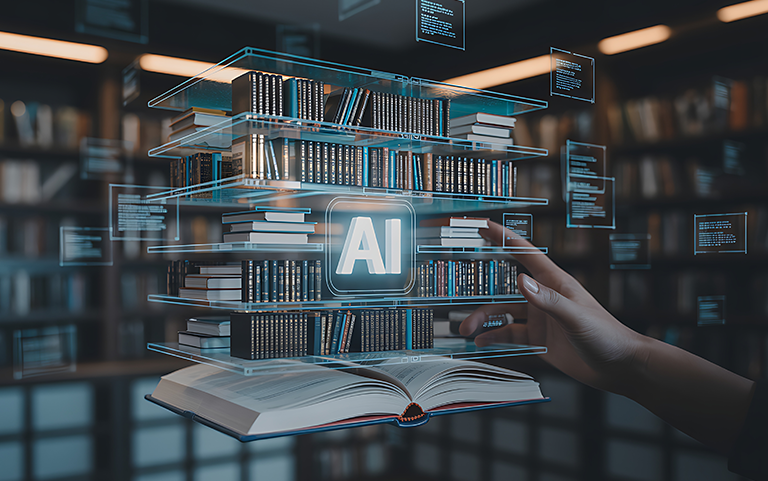
Document-Driven Agent(Search and Summarization)
An agent that collects and utilizes information from various data sources to support business operations.
Learn more
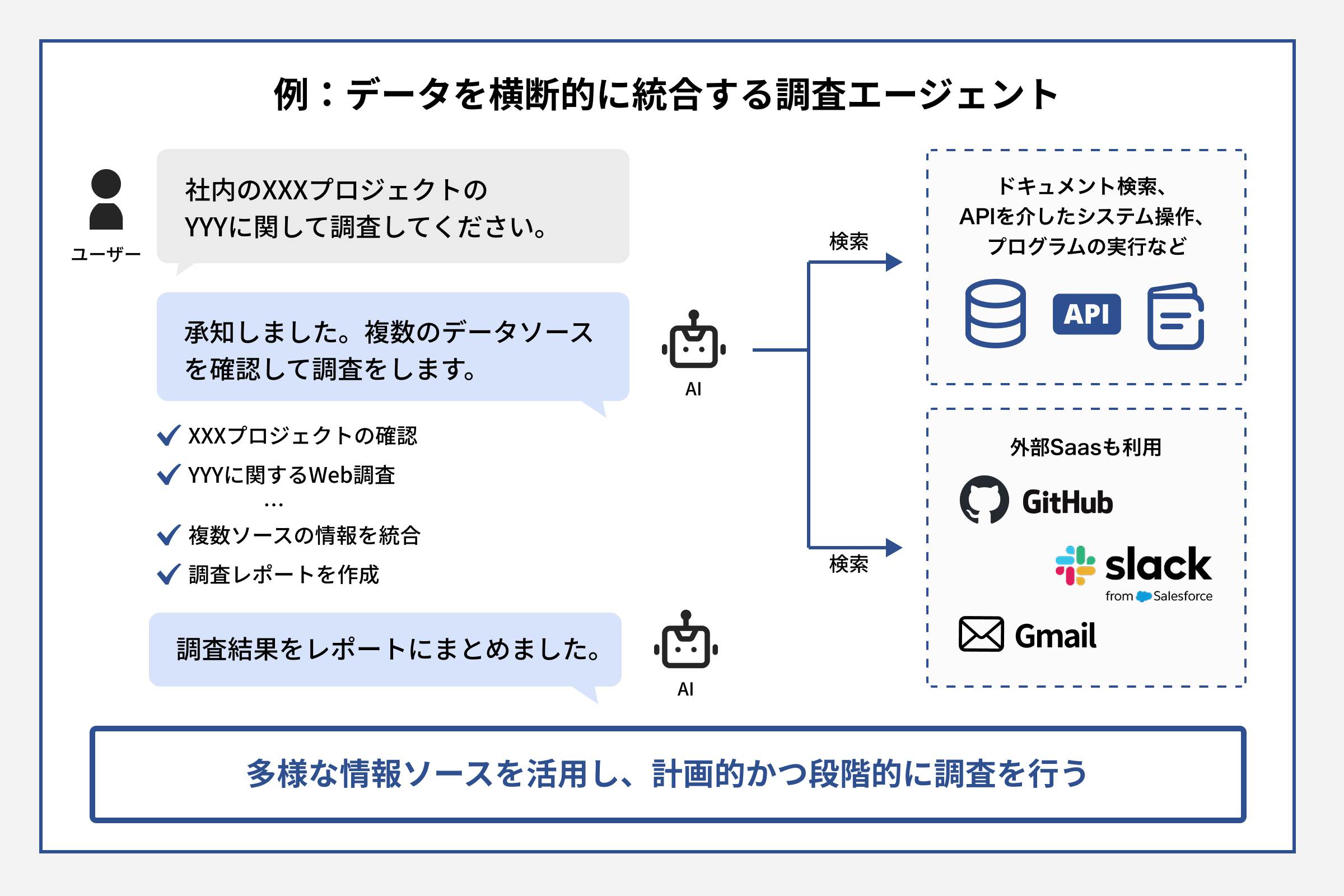
Document-Driven Agent (Search and Summarization)
A document-driven agent performs cross-source searches of internal and external data sources, and presents summarized results with references. It supports the effective use of similar cases from the past and maintenance data.
By leveraging the advanced text comprehension capability of generative AI, a knowledge-based agent can search across internal and external data sources. Through the autonomous use of multiple search tools, it not only demonstrates advanced search performance at a previously unavailable level, but also integrates information from multiple data sources to generate summaries with links to supporting evidence—providing responses with clearly stated sources. More than just a simple document search tool, it facilitates integrated handling of diverse information, including external SaaS platforms.Key Functions
- Cross-source search using connectors (Google Drive, SharePoint, file servers, databases and external SaaS)
- Summarization, comparison, Q&A, citation and change detection across multiple data sources
- Linkage with a variety of business tools using integrated data
-

Document Creation Agent
An agent that automatically generates documents based on defined instructions, procedures and templates.
Learn more
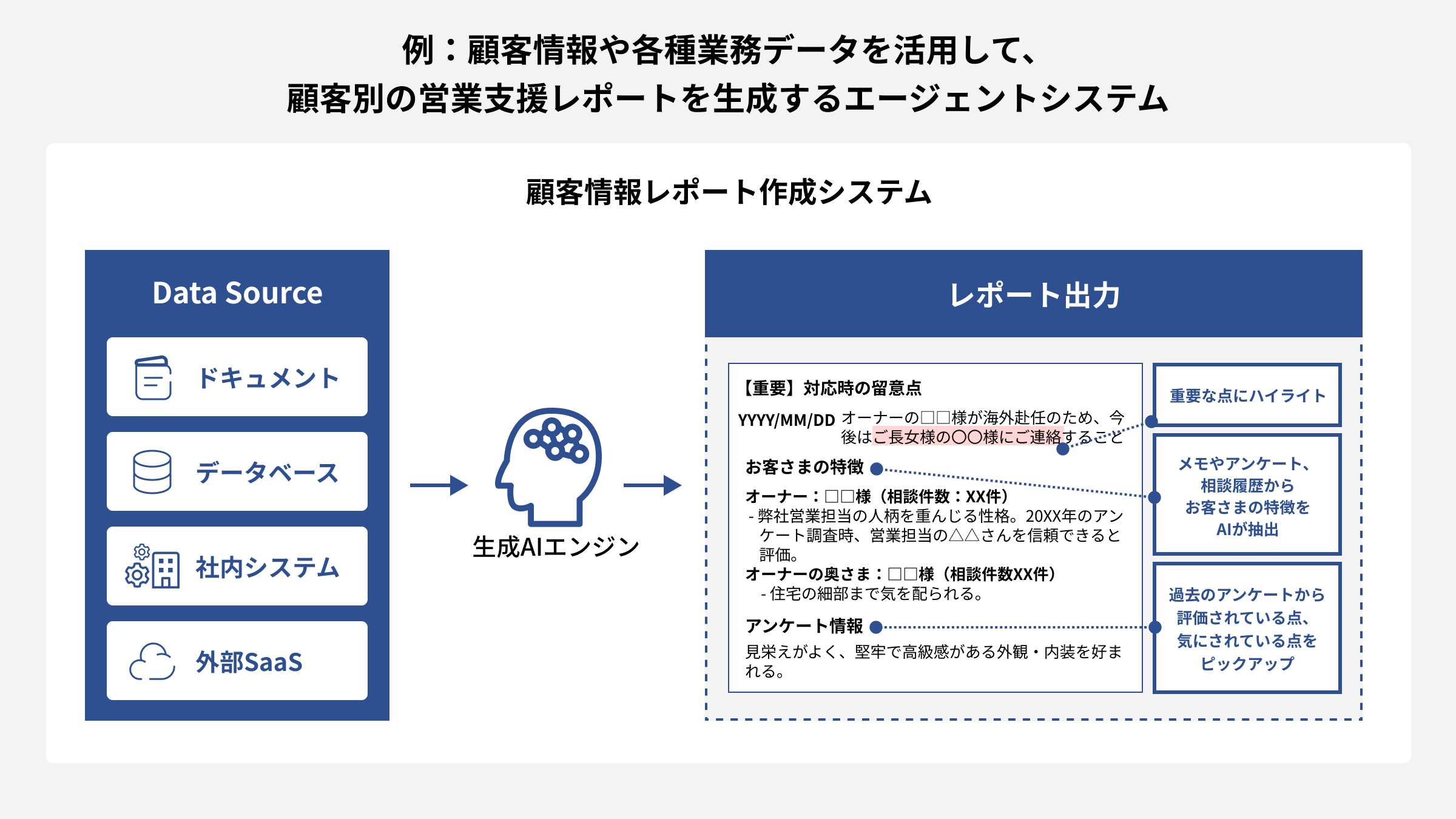
Document Creation Agent
A document creation agent automatically generates a wide range of documents based on defined instructions, procedures and templates. By incorporating review processes, it helps standardize document quality.
Leveraging the advanced text generation capabilities of generative AI, the agent can produce various types of documents. It not only generates text, but also creates documents that conform to specified formats, after which it can automatically execute necessary follow-up processes such as file integration and distribution to coordinate with workflow.Key Functions
- Document creation (support for multiple formats including Google Docs, Microsoft Word, Slides, and Markdown)
- Text processing (data collection, content insertion, version control, rewriting and proofreading)
- Export and distribution (PDF and email) in coordination with workflow
-
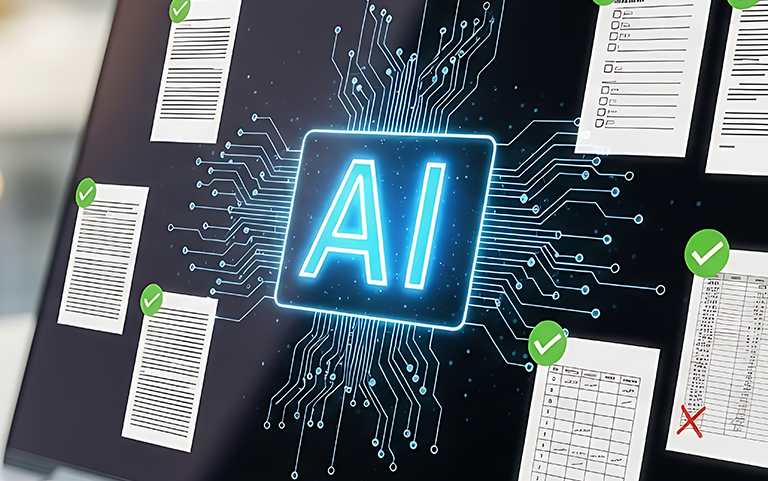
Application Review Agent
Automatically verify whether internal application processes conform to policies and procedures. Identifying conditions for rejection and missing information reduces resubmissions.
Learn more
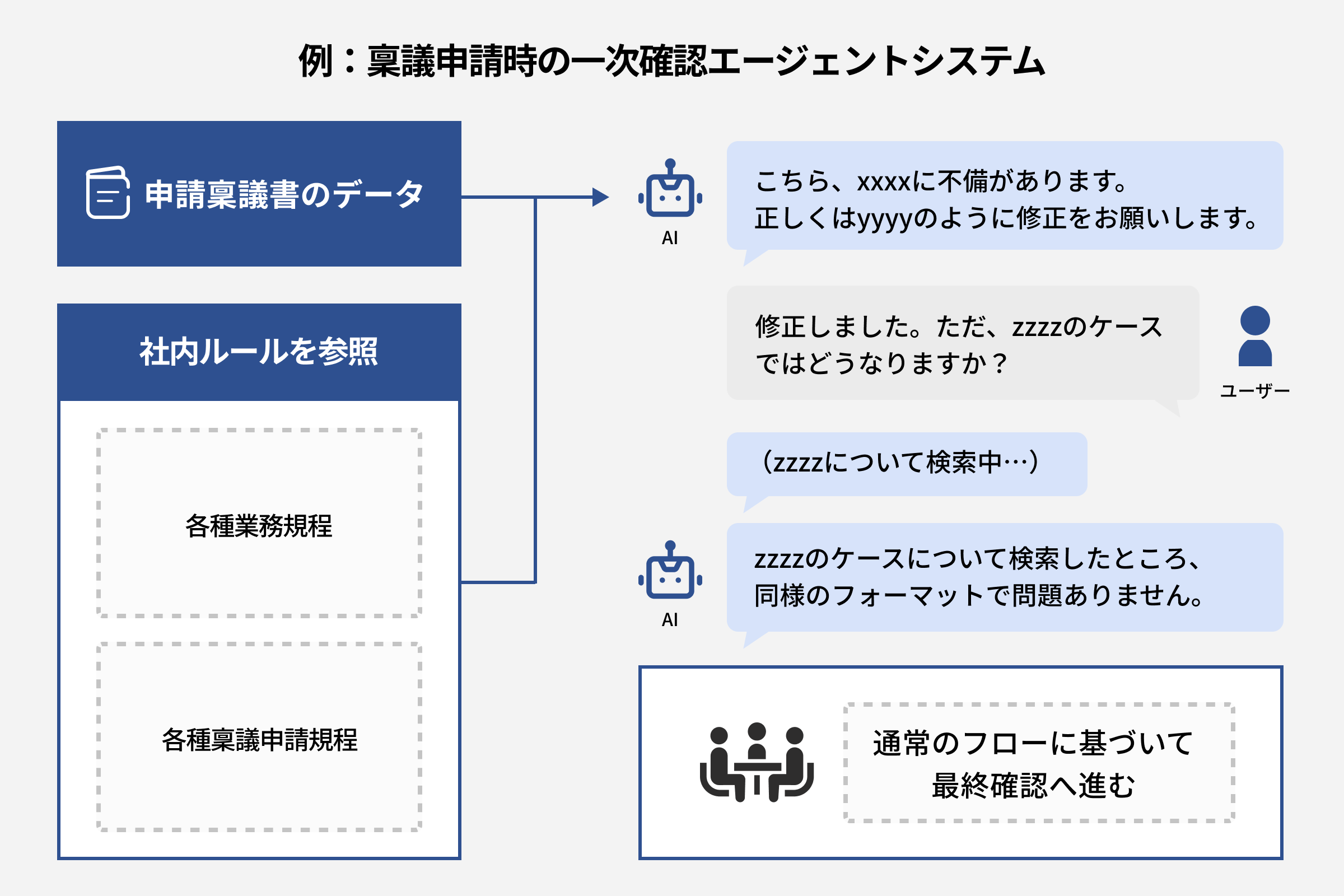
Application Review Agent
An application review agent automatically reviews applications based on defined policies and procedures. By clearly identifying reasons for rejection and missing information, it reduces the need for resubmissions.
By leveraging the advanced text comprehension capability of generative AI, the agent automatically performs document reviews and evaluations. It references internal policies and manuals to check whether submissions are completed in accordance with the requirements. When resubmission is necessary, it clearly explains the reasons, helping to minimize unnecessary interactions for a smoother workflow.Key Functions
- Automated determination of whether documents conform to policies and procedures
- Clear presentation of review results, highlighting points for correction
- Seamless integration with approval workflows by linking results to other tools
-

Sales Support Agent
Understand customer interactions and automate sales operations using various tools.
Learn more
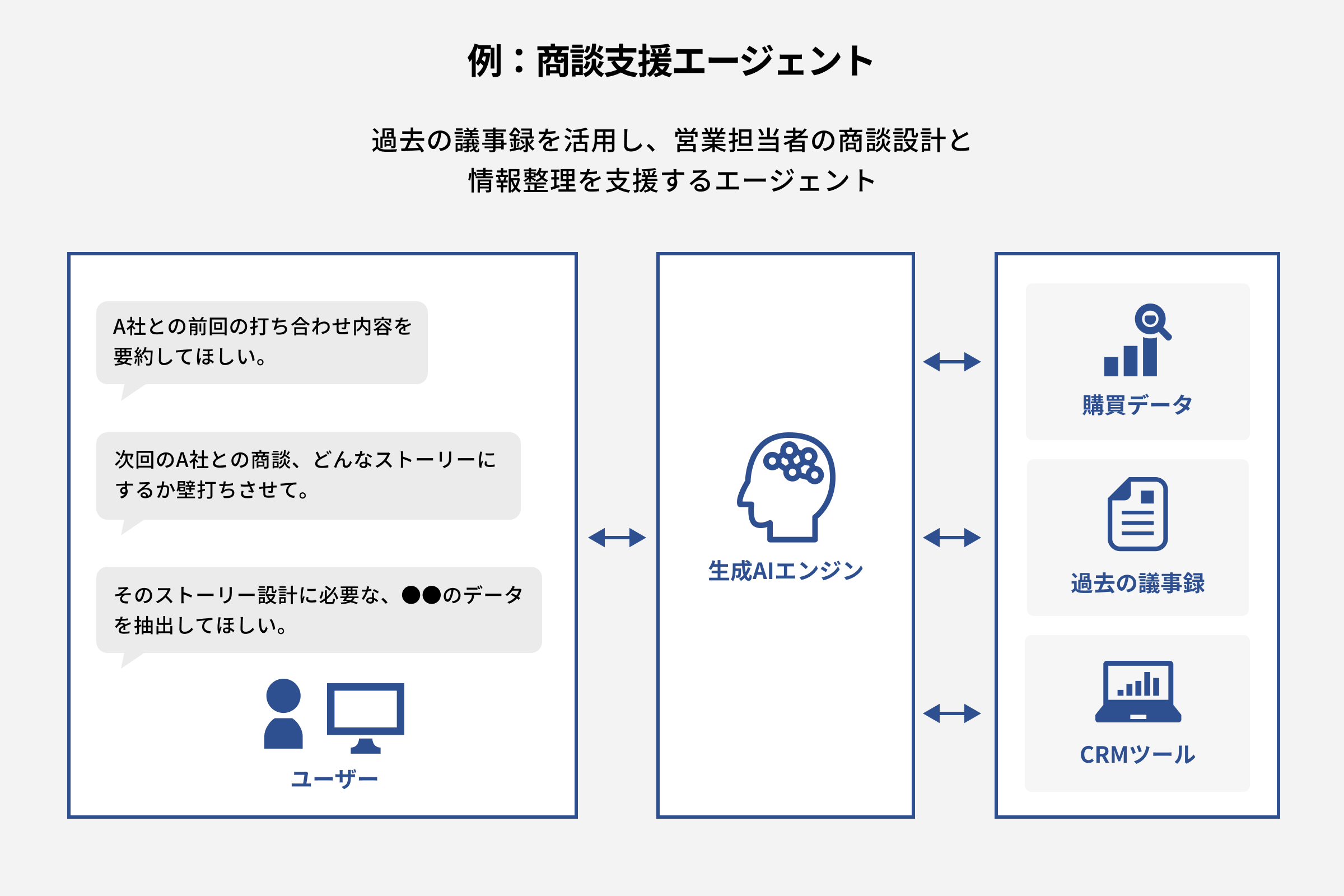
Sales Support Agent
A sales support agent understands customer interactions and automates sales operations through integration with CRM tools.
By leveraging the advanced text comprehension capability of generative AI, the agent analyzes the content of emails, meeting notes and private messaging to generate summaries, extract tasks and recommend follow-up actions. Based on this information, it can also automatically create drafts of proposals and cost estimates, seamlessly updating the CRM platform.Key Functions
- Summarization of emails and private messaging, with task extraction and follow-up recommendations
- Automated generation of proposals and cost estimates
- Integration with CRM tools for automatic updates to the latest information
-
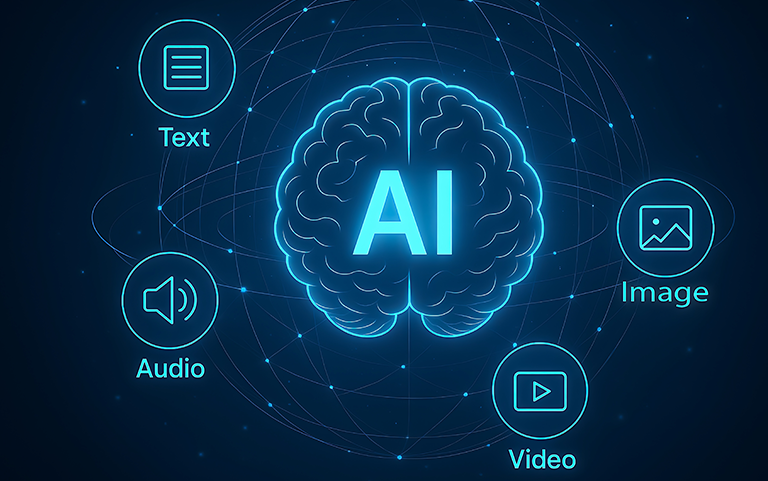
Multimodal Agent
An agent that understands multiple data modalities, including images, video and audio, and leverages them to provide support.
Learn more
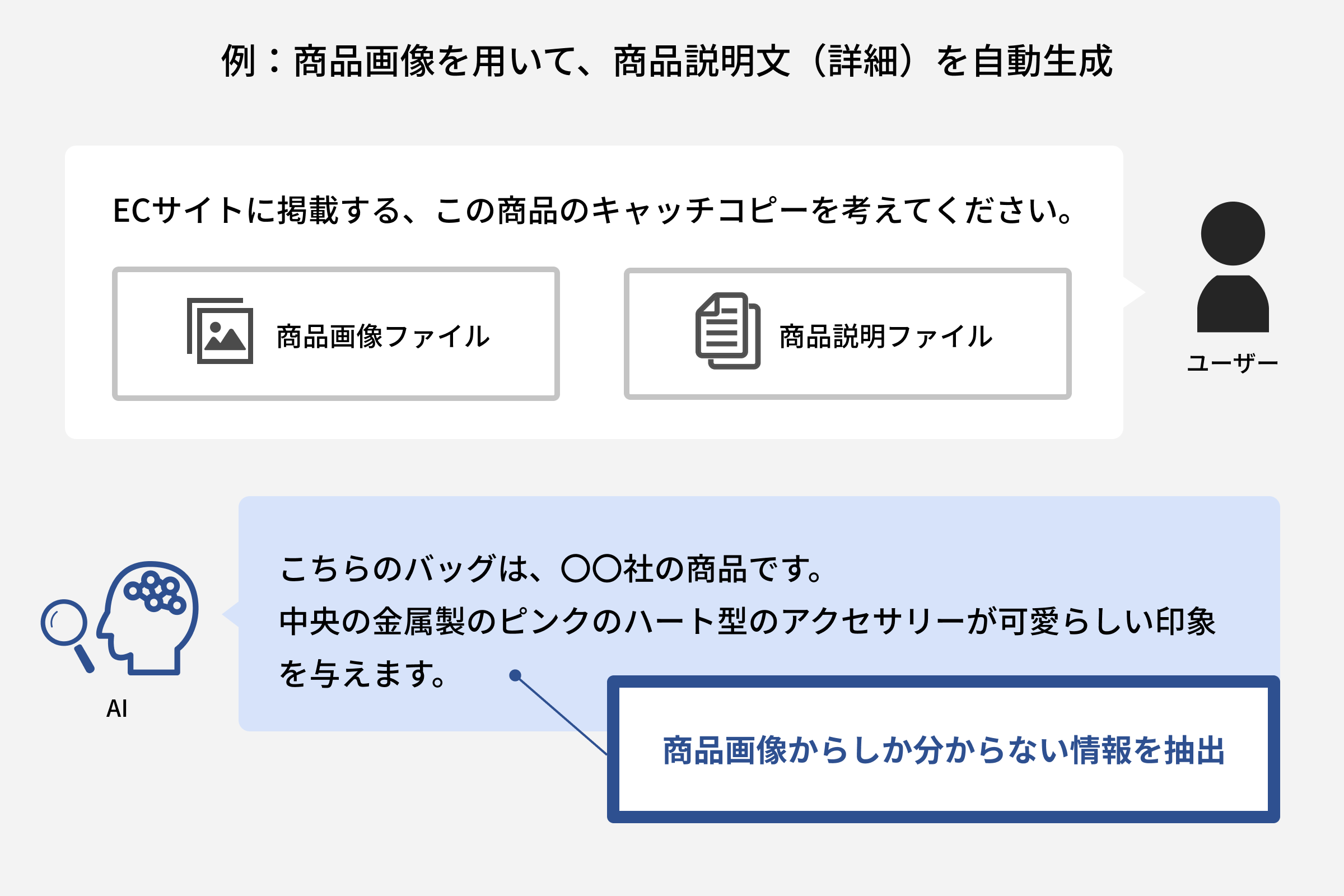
Multimodal Agent
A multimodal agent understands images, video and audio, enabling automated generation of meeting transcripts and extraction of information from visual content.
By leveraging the advanced language comprehension and multimodal processing capabilities of generative AI, the agent automatically generates meeting transcripts and summaries from audio, and extracts information from images. It enables the effective use of data that was previously difficult to process for greater automation of business operations. In addition, integration with sales support and marketing tools supports the establishment of more advanced business processes.Key Functions
- Speech recognition, meeting transcription and summarization
- Information extraction and structuring using a vision-language model (VLM)
- Integration with sales support and marketing tools
Examples of DATUM STUDIO Implementation Support
-

Manufacturing(Maintenance Support Agent)
Utilize technical documentation, change instructions and sensor logs across sources to provide support from interactive answers to questions about maintenance work to recommendations for maintenance planning, contributing to improved operational efficiency and stable equipment operation.
Learn more
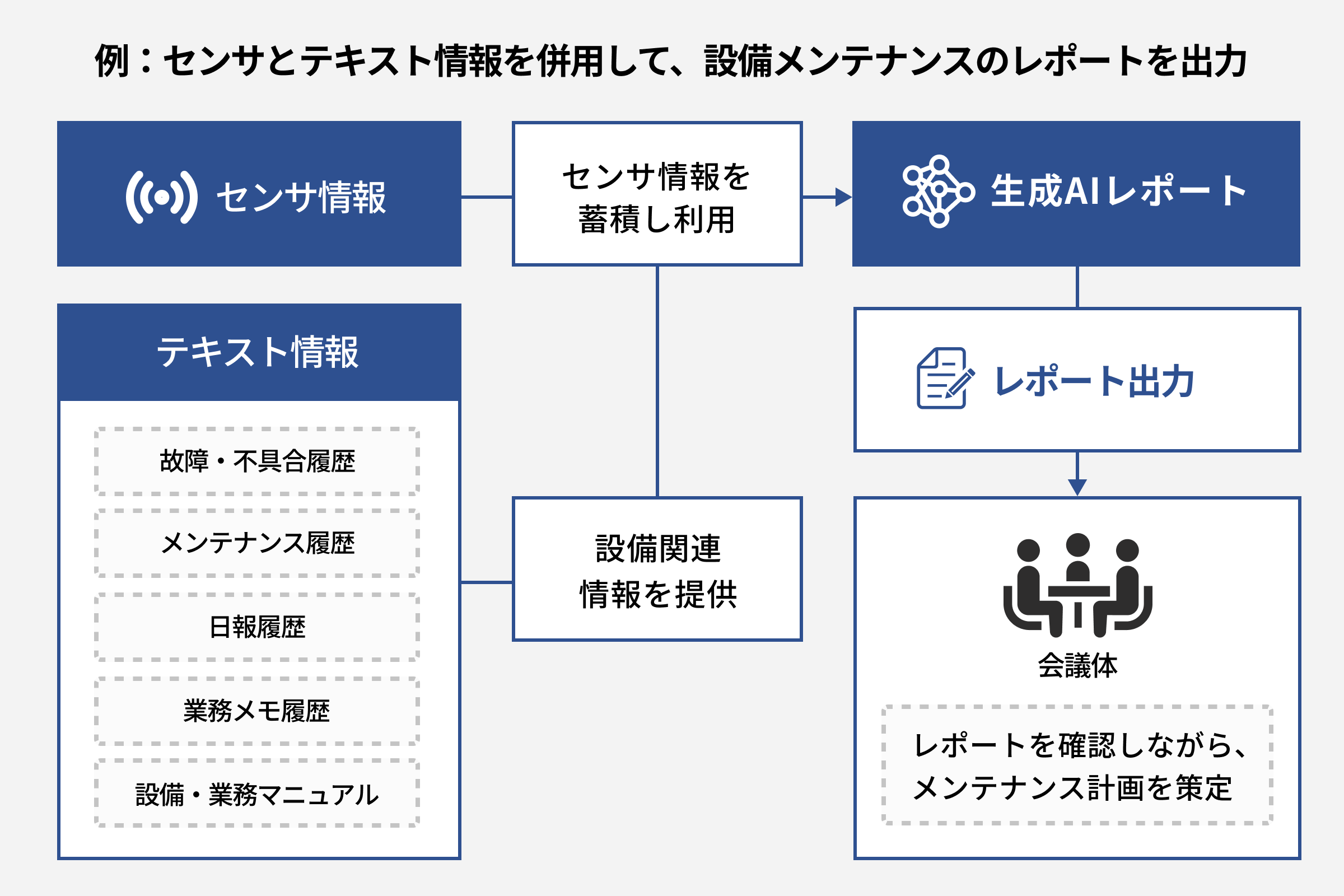
Manufacturing (Maintenance Support Agent)
A maintenance support agent for manufacturing utilizes technical documentation, change instructions and sensor logs across sources to provide wide-ranging support, from interactive assistance for maintenance work to recommendations for maintenance planning. This contributes to improved operational efficiency and stable equipment operation.
Role of the Agent
- Recommends optimal maintenance plans based on detected sensor anomalies
- Supports on-site work by referencing equipment maintenance manuals
Key Integrations
- Document storage / PLM
- Equipment sensor data
- Maintenance management systems
-

Distribution and Retail(Business Data Utilization Agent)
Perform cross-analysis of sales, inventory and weekly report data to automatically generate summaries, detect anomalies and analyze store sales, supporting rapid decision-making on site.
Learn more
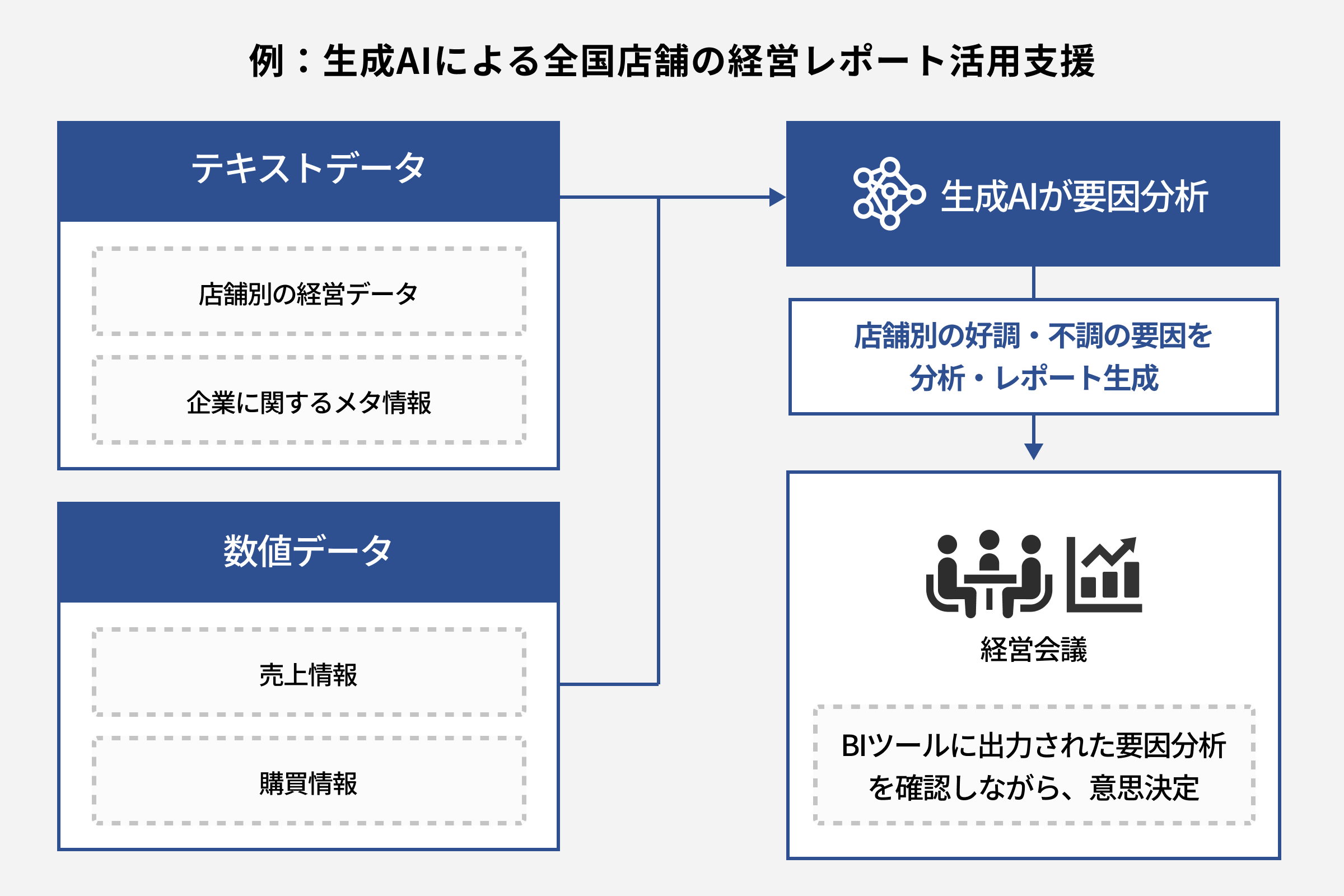
Distribution and Retail (Business Data Utilization Agent)
A business data utilization agent for the distribution and retail industry performs cross-analysis of sales, inventory and weekly report data to enable automated summarization, anomaly detection and store sales analysis. This supports rapid decision-making on site.
Role of the Agent
- Automatically summarizes KPIs and weekly reports to quickly identify key metrics and trends
- Analyzes store-level performance using a demand forecasting model to identify strong and underperforming locations
- Visualizes management conditions by store using a BI dashboard
Key Integrations
- POS, inventory, merchandising and weekly report data
- BI dashboard
- Notifications (email and private messaging)
-

E-commerce and Mail-order(Email Response Agent)
Automatically generate drafts of optimal responses based on inquiry content by referencing conversation logs, purchase histories and product information to improve the speed of customer response.
Learn more
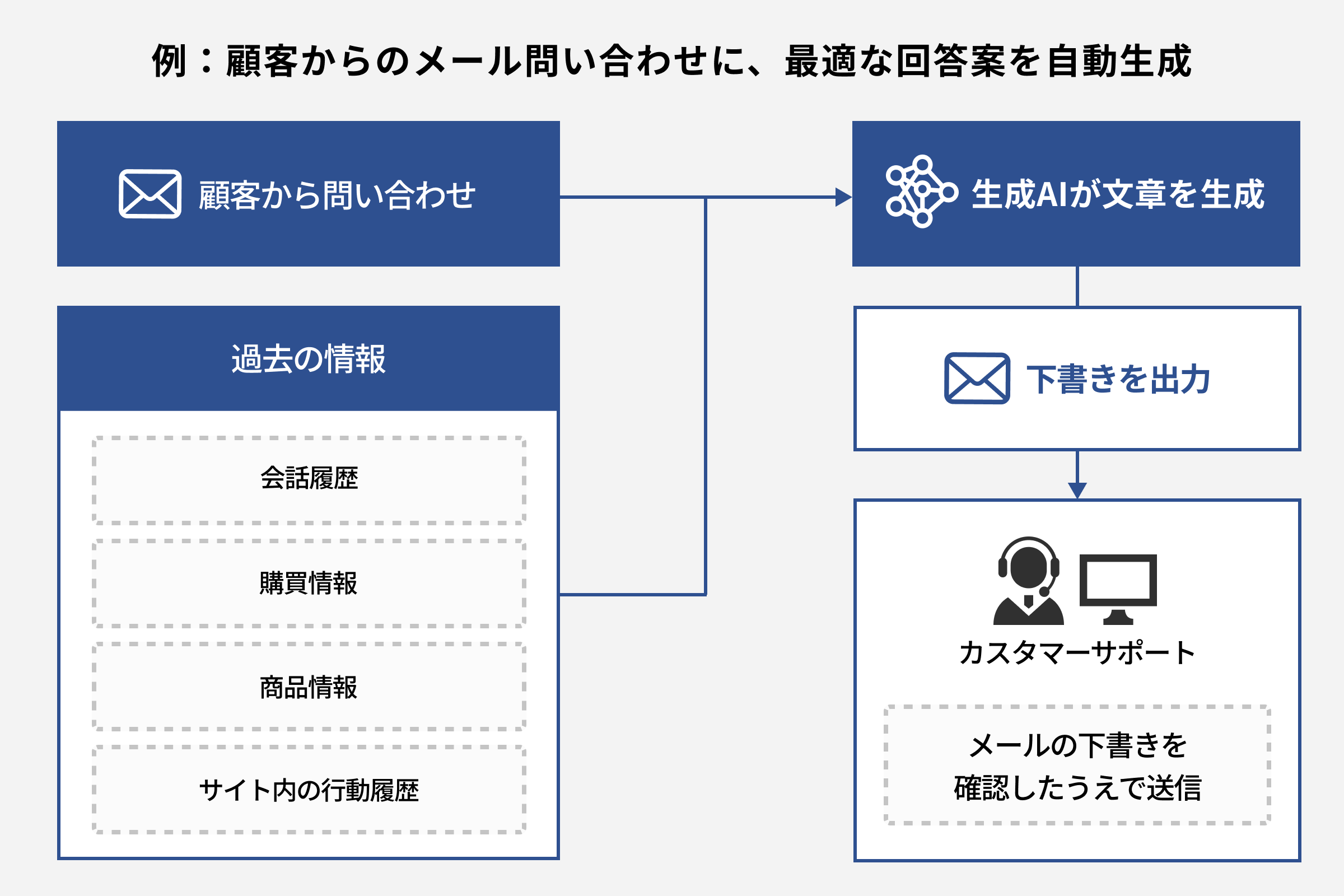
E-commerce and Mail-order: Email Response Agent
An email response agent for e-commerce and mail-order businesses automatically generates drafts of optimal responses based on inquiry content by referencing conversation logs, purchase histories and product information. This improves the speed of customer response while maintaining quality.
Role of the Agent
- Automatically gathers necessary data from conversation logs and purchase histories and product databases
- Applies templates to automatically generated email response drafts
- Supports smooth, coordinated final review by customer service operators
Key Integrations
- Core e-commerce systems / CRM
- Product information databases / Knowledge bases
- Email and private messaging tools
Tech Stack
Supported Tools and Data Integrations
Cloud Storage
- Google Drive
- OneDrive
- Microsoft SharePoint
Communication
- Slack
- Microsoft Teams
- Chatwork
- Gmail
- Microsoft Outlook
Business Apps
- Salesforce
- Notion
- Others, SaaS
Internal Systems
- Internal API
- File server
- Database
Additional support for integration with multiple external tools
Supported LLM and Multimodal AI
- OpenAI
- Google Cloud Vertex AI(Gemini Model)
- Amazon Bedrock
- Local LLMs
- Speech recognition models
- Vision-language models(VLMs)
Supported Core Technologies
- Google Cloud
- Microsoft Azure
- Amazon Web Services(AWS)
- Snowflake
- Databricks
Supported Agent Frameworks
- Agent Development Kit(ADK)
- OpenAI Agents SDK
- LangGraph
- CrewAI
Note: Services not listed above can also be evaluated and integrated on a case-by-case basis. We will propose the optimal configuration based on your use case and requirements.
Implementation Process
-
Assessment
Clarify current issues and desired outcomes.
Define use cases and success metrics, and confirm prerequisites related to permissions, approvals and auditing. -
Design
Design the scope and user experience.
Define the tools to be used, guardrails, data and access controls, and operational rules. -
MVP Implementation
Begin with small-scope implementation.
Make ongoing improvements by repeating a “plan, execute and observe” cycle. -
Pilot Operation
Validate effectiveness and safety, and set up fallback mechanisms and exception-handling processes.
Identify areas for improvement in preparation for full-scale rollout. -
Operation Launch
Ongoing ImprovementStart operation in the actual use environment.
Establish an improvement cycle based on evaluation data and metrics for a phased expansion of the scope of usage.
Success Metrics (Examples)
We visualize results after system launch using quantitative metrics, going beyond implementation to support adoption.
-
Self-Resolution Rate
First-Time Resolution (FTR)+15%
-
Work Hours Required for Operation
–20%
-
Work Quality Improvement / Standardization
+10 pts.
-
Response Time Reduction(95th-percentile maximum
user wait time)–25%
Note: The figures above are examples only. We will design the optimal KPIs for your industry and use case.
Frequently Asked Questions
- QI’m concerned about the AI agent malfunctioning or failing to complete tasks.
- AWe design our systems to ensure safety, for example by incorporating human approval processes depending on the application. Starting from a risk analysis of your existing workflow, we provide end-to-end support so you can use our AI agents with confidence.
- QCan the AI agent integrate with our existing SaaS and internal systems?
- AYes. The agent can integrate with major SaaS platforms, databases and internal APIs. Even in cases where integration with existing tools is difficult, we can enable connectivity through custom development.
- QDo you take security and compliance into account?
- AYes. During implementation, we assess your data and systems to design security and compliance measures tailored to your use case. We develop and deliver operational frameworks designed to ensure safety.
Note: The content on this page is based on information available as of 2025. Please feel free to contact us for the latest updates.
Partners











Team comprising over 150 data scientists Proven track record across industries and sectors
DATUM STUDIO has a team of more than 150 data scientists and a proven track record of using AI in the resolution of management issues for companies in a broad range of industries and sectors. To help you achieve your business goals, we can flexibly respond to needs from problem identification to planning for optimal data utilization, proof of concept (PoC), infrastructure building, AI model construction, continuous integration (CI), continuous delivery (CD), and continuous training (CT).